



 Contact
 Call Us
 Book Online








Spinal injuries can occur during a car accident, workplace accident, fall, sports injury, or sudden lifting incident. They can also develop gradually from repetitive motion, prolonged sitting, poor posture, and ongoing physical strain.
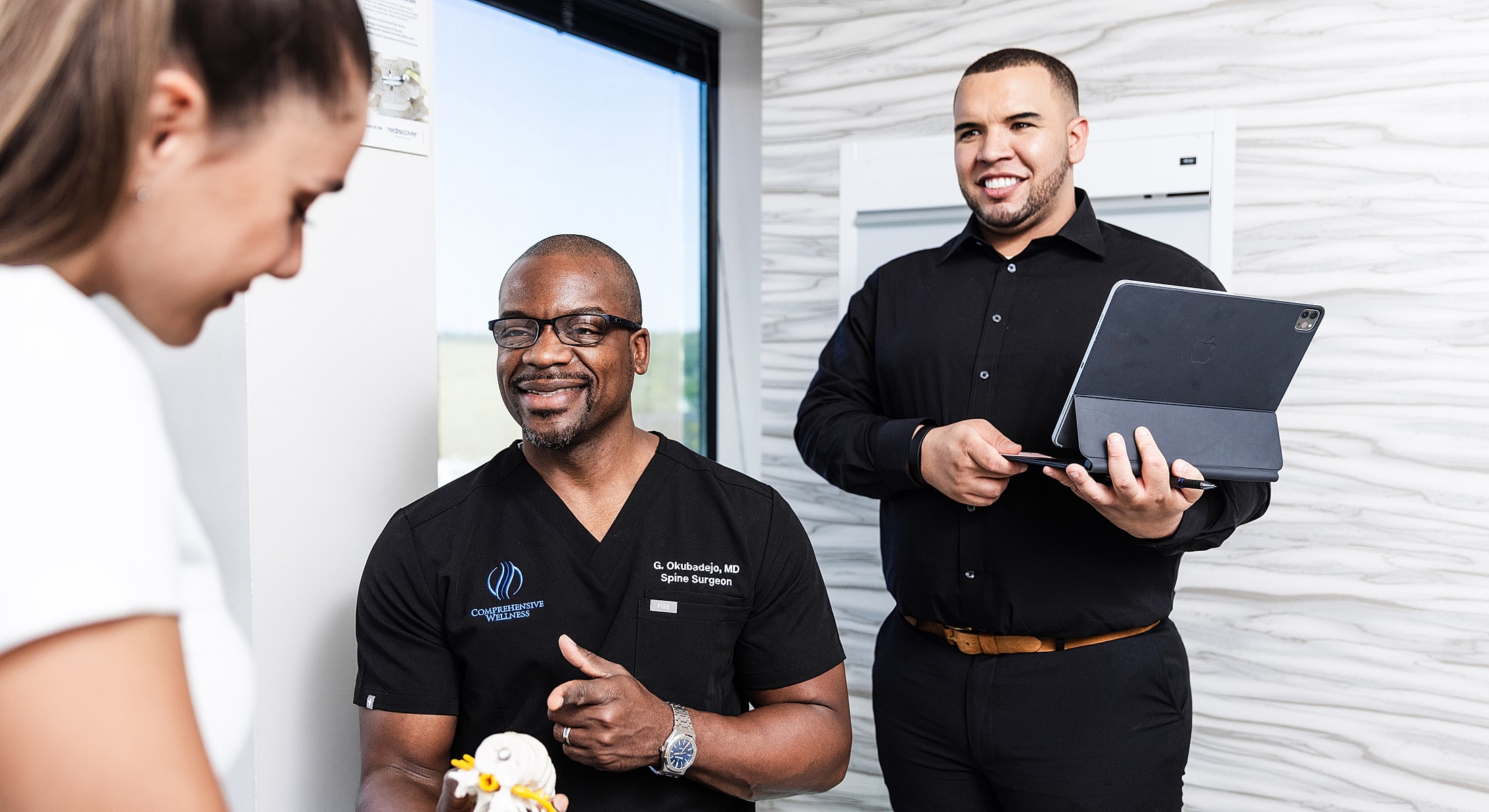
At The Institute for Comprehensive Spine Care, Dr. Gbolahan Okubadejo, MD, FAAOS, and his team diagnose and treat spinal injuries affecting the neck, back, nerves, vertebrae, and spinal cord. Treatment is based on the type of injury, the structures involved, and the symptoms affecting mobility, function, work, and daily life.
The goal is to relieve pain, support recovery, and protect long-term spinal health.
A spinal injury involves damage to one or more structures within the spinal column. The injury may affect the cervical vertebrae in the neck, thoracic spine, lumbar vertebrae in the lower back, intervertebral discs, muscles, ligaments, joints, nerve roots, or spinal cord.
Spinal injuries can happen suddenly or gradually, in a number of different ways, such as from:
Common injuries include whiplash, lower back strains and sprains, herniated or bulging discs, sciatica, nerve compression, and compression fractures. Workplace injuries may also develop from repetitive motion or poor ergonomics.
A spinal cord injury represents a more serious form of trauma. Because the spinal cord carries signals between the brain and body, damage can affect movement, sensory function, and other neurological abilities below the level of the injury. Symptoms such as significant weakness, loss of sensation, or rapidly changing neurological function require immediate medical attention.

Spinal injuries do not always produce symptoms immediately. Neck pain, back pain, stiffness, headaches, numbness, tingling, weakness, or radiating pain may appear at the time of the injury or become more noticeable later.
An accurate diagnosis helps determine which structures were damaged and the right treatment for the injury. Evaluation at The Institute for Comprehensive Spine Care may include:
Spinal injury treatment varies depending on how the injury occurred, which part of the spine is affected, the severity of the damage, overall health, and the way symptoms respond to initial care.
Many spinal injuries can be treated conservatively. More serious trauma, spinal instability, persistent nerve compression, or spinal cord involvement may require surgical treatment.
The treatment plan may also consider the physical demands of a patient's job, daily activities, and the level of function required to return safely to work or recreation.

Conservative care focuses on relieving pain, restoring movement, and giving injured tissues an opportunity to heal.
Treatment may include:
Physical therapy can play an important role in the rehabilitation process by improving strength, mobility, movement patterns, and function. Treatment may also include guidance on posture, lifting mechanics, and safer movement to reduce additional stress on the spine.
Surgery may be recommended when spinal injuries cause significant instability, serious structural damage, persistent nerve compression, or symptoms that do not improve with appropriate non-surgical treatment.
Depending on the injury, surgical treatment may include:
The procedure selected depends on the mechanical problem within the spine. Decompression may be used to relieve pressure on nerves or the spinal cord, while fusion may provide stability when damaged vertebrae can no longer safely support normal movement.
Recovery can vary depending on the type and severity of the injury. A muscle strain may improve relatively quickly, while a herniated disc, fracture, severe nerve injury, or spinal cord injury can require a longer rehabilitation process.
Non-surgical recovery may involve physical therapy, gradual increases in activity, pain management, and regular follow-up evaluations. After spine surgery, temporary activity restrictions may be followed by progressive movement and strengthening as healing allows.
For work-related spinal injuries, rehabilitation may also account for the specific demands of the patient's occupation. Returning to desk work places different demands on the spine than returning to a job that involves lifting, climbing, carrying, or operating heavy equipment.
The overall goal is to maximize recovery, restore as much mobility and function as possible, and improve quality of life.
A workplace spinal injury can occur during a single accident or develop gradually because of repetitive physical demands. Common causes include lifting injuries, falls, prolonged sitting, repetitive motion, poor posture, and equipment-related accidents.
Workers' compensation may provide medical benefits and wage replacement to eligible employees who are injured during employment. Medical documentation may include the diagnosis, treatment plan, physical restrictions, progress, and ability to return to specific job duties.
Dr. Okubadejo has extensive experience treating patients through the workers' compensation system and managing the medical documentation and communication associated with these cases.
Dr. Gbolahan Okubadejo is a board-certified orthopedic spine surgeon and the director of The Institute for Comprehensive Spine Care. He treats traumatic, degenerative, and pain-related spinal conditions throughout the New York and New Jersey metropolitan area.
His approach emphasizes accurate diagnosis, patient education, preventive care, and minimally invasive treatment when appropriate. Treatment recommendations are based on the structures involved, the severity of the injury, and the safest way to restore spinal stability and function.
The Institute for Comprehensive Spine Care provides spinal injury treatment in New York and New Jersey for patients dealing with injuries after motor vehicle accidents, workplace accidents, falls, sports trauma, and other causes.
With access to diagnostic imaging, conservative care, rehabilitation, minimally invasive procedures, and surgical treatment options, each care plan can be matched to the underlying injury and the way it is affecting the body.
Patients searching for spinal injury treatment in New Jersey or New York can schedule a consultation to determine what is causing their symptoms and which treatment options may provide the clearest path toward recovery.
Common causes include car accidents, workplace accidents, falls, sports injuries, heavy lifting, repetitive motion, and direct trauma. Some spinal conditions also develop gradually from repeated strain or poor ergonomics.
Symptoms can include neck pain, back pain, stiffness, reduced mobility, numbness, tingling, weakness, headaches, or pain that travels into an arm or leg. More serious spinal cord injuries may cause significant changes in movement or sensation.
Diagnosis typically begins with a medical history and physical examination. X-rays, MRI scans, CT scans, and other tests may be used to evaluate the vertebrae, discs, spinal cord, nerves, and surrounding tissues.
Many spinal injuries can be managed with physical therapy, pain management, medication, activity changes, and other conservative treatments. Surgery may be recommended for significant instability, structural damage, spinal cord compression, persistent nerve compression, or symptoms that do not improve with non-surgical care.
Recovery times vary depending on the injury, its severity, overall health, and the treatment required. Minor soft tissue injuries may improve within weeks, while fractures, nerve injuries, and conditions requiring surgery can take several months or longer to recover.
Persistent or worsening neck or back pain, reduced mobility, numbness, tingling, weakness, or radiating pain should be evaluated. Significant trauma or neurological symptoms may require immediate treatment.