
 Contact
 Call Us
 Book Online









Whiplash can turn an ordinary movement of the neck into a source of pain, stiffness, headaches, and reduced mobility. Although it is most often associated with a rear-end car collision, the same sudden force can occur during sports accidents, falls, physical abuse, and other traumatic injuries.
At The Institute for Comprehensive Spine Care, Dr. Gbolahan Okubadejo, MD, FAAOS, provides whiplash treatment in New York and New Jersey for patients dealing with recent injuries, persistent neck pain, and chronic complications. Each treatment plan is based on the severity of the injury, symptoms, medical history, and any additional damage involving the cervical spine.
If neck pain or reduced range of motion is interfering with daily life after an accident, schedule a consultation to have the injury properly evaluated.
Whiplash is a neck injury caused by rapid acceleration and deceleration of the head. The sudden force stretches and strains the muscles, ligaments, and other soft tissues that support the neck.
Rear-end car accidents are the most familiar cause, but whiplash can also occur during contact sports, falls, sports accidents, or other events that suddenly force the head forward and backward. An estimated 3 million cases occur in the United States each year, and an injury can happen even when a collision initially seems relatively minor.
Symptoms of whiplash may begin immediately or develop over the following hours or days. The injury can make turning the head, driving, sleeping, working, and exercising uncomfortable. When symptoms persist for long periods, chronic pain can have a significant effect on mobility and overall well-being.

Common symptoms of whiplash include neck pain and stiffness, headaches that may begin near the base of the skull, reduced neck mobility, shoulder or upper back pain, dizziness, fatigue, and pain that becomes worse with movement.
Some patients also experience numbness or tingling in the arms, difficulty concentrating, sleep disturbance, or persistent muscle tightness.
Symptoms after a car accident or other neck injury should not be dismissed simply because they seem mild at first. Seeking medical attention allows a healthcare professional to rule out fractures, spinal instability, nerve involvement, or other injuries that may require different treatment.
Appropriate whiplash treatment can help:

Patients may benefit from treatment when neck pain, stiffness, headaches, dizziness, upper back pain, or reduced range of motion begins after a car accident, fall, sports injury, or other sudden impact.
Evaluation is especially important when symptoms persist, worsen, interfere with daily activities, or include numbness, tingling, or weakness in the arms or hands.
During an appointment, Dr. Okubadejo reviews the circumstances of the injury, full medical history, current symptoms, previous treatment, and overall health. This information helps determine whether the symptoms are consistent with a whiplash injury or another cervical spine condition.
Whiplash is primarily diagnosed through medical history and physical examination. Dr. Okubadejo evaluates neck range of motion, tenderness, reflexes, strength, sensation, and movements that increase pain.
Imaging does not directly confirm whiplash. Instead, X-rays, CT scans, and MRI scans may be used when the examination suggests another injury that needs to be identified or ruled out.
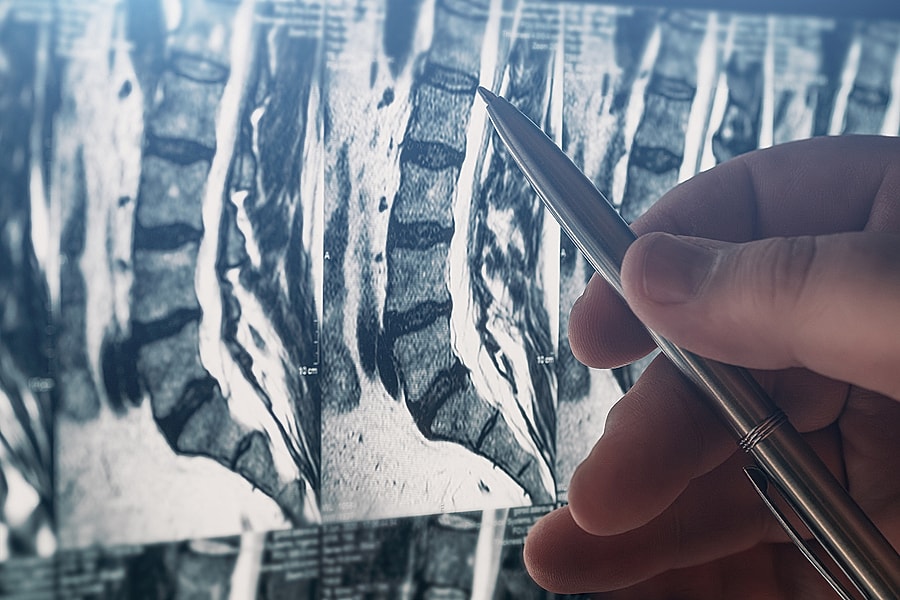
X-rays can evaluate the bones and spinal alignment of the cervical spine. CT scans provide more detailed views of bone and may be useful after significant trauma. MRI scans can show the spinal cord, discs, ligaments, and other soft tissues when persistent symptoms or neurological changes require a closer look.

Whiplash treatment depends on the severity and duration of symptoms, neck mobility, overall health, and any other injuries identified during evaluation.
Most patients are treated without surgery. The goal is to reduce pain while gradually restoring normal movement and function rather than keeping the neck immobilized for long periods.
Physical therapy is often an important part of a tailored treatment plan. Gentle stretches, strengthening exercises, posture work, and manual therapy may help patients regain mobility and restore normal movement patterns.
Pain management may also include appropriate over-the-counter medications, short-term prescription medication or muscle relaxants in selected cases, and heat or cold therapy. An ice pack may help during the early period after injury, while heat packs can sometimes loosen tight muscles before stretching or exercise.
Some physical therapy programs may use transcutaneous electrical nerve stimulation, or TENS, for short-term pain relief. Chiropractic care or other treatments may also be considered selectively based on the injury and response to care.
At-home care and ergonomic changes can support recovery between appointments. Staying appropriately active is generally preferable to prolonged immobilization once more serious injuries have been excluded.
If whiplash pain is continuing despite initial care, schedule an evaluation to discuss additional treatment options and determine why symptoms are lingering.
Surgery is rarely required for an uncomplicated whiplash injury.
Surgical treatment may become relevant when an accident causes a separate structural problem, such as significant disc damage, spinal instability, nerve compression, or another cervical spine injury.
When necessary, options may include artificial disc replacement, spinal fusion, discectomy, or spinal decompression. The procedure is selected according to the actual structural problem rather than the diagnosis of whiplash alone.


Many patients begin to improve within a few weeks with appropriate treatment, exercise, and gradual return to activity. Recovery varies, however, and some patients experience chronic neck pain or other symptoms for several months or longer.
Physical therapy can help restore mobility, strength, and confidence in movement as healing progresses. Recovery may also include pain management, home exercises, ergonomic changes, and regular follow-up when symptoms persist.
The focus is on restoring function while reducing the chance that limited motion, muscle weakness, or ongoing pain becomes a chronic issue.





Dr. Gbolahan Okubadejo is a board-certified orthopedic spine surgeon who treats traumatic and pain-related cervical spine conditions throughout New York and New Jersey.
Whiplash treatment at The Institute for Comprehensive Spine Care begins with an accurate evaluation of the neck rather than assumptions based solely on how the accident occurred. Diagnostic imaging is used when clinically appropriate, and treatment can range from conservative rehabilitation and pain management to advanced spine care when another structural injury is identified.
Patients receive a tailored treatment plan designed around their symptoms, mobility, lifestyle, and recovery needs, with an emphasis on restoring function through the least invasive appropriate treatment.
Neck pain after a car accident, sports injury, fall, or other sudden trauma deserves a clear diagnosis and an appropriate treatment plan.
The Institute for Comprehensive Spine Care provides whiplash treatment in New York and New Jersey for patients experiencing recent symptoms as well as chronic neck pain after an earlier injury.
Schedule a consultation with Dr. Okubadejo to identify the source of your symptoms and begin a plan focused on pain relief, mobility, and long-term function.
Whiplash occurs when sudden force rapidly moves the head backward and forward. Rear-end car accidents are a common cause, although sports injuries, falls, physical trauma, and other impacts can produce the same type of neck injury.
Mild whiplash symptoms often improve within a few weeks. Medical evaluation is still important after an injury to rule out fractures or other cervical spine damage and determine whether treatment could support recovery.
Common treatments include physical therapy, pain medication, gentle exercise, heat or cold therapy, activity modification, and other forms of pain management. Treatment depends on the severity and duration of symptoms.
Recovery varies from patient to patient. Many patients improve within a few weeks, while chronic neck pain or more complex injuries may require treatment for several months.
Yes. Some patients develop persistent pain, stiffness, reduced range of motion, or other chronic issues after a whiplash injury. Early evaluation and an appropriate treatment plan can help address symptoms and identify factors that may affect recovery.
Medical attention is appropriate after an accident or trauma when neck pain, stiffness, headaches, numbness, tingling, weakness, or reduced mobility develops. Severe pain or neurological symptoms should be evaluated promptly.